

FROM THE VINEYARD: VERAISON AND THE START OF HARVEST
October is when Finger Lakes harvest finds its finish line. The hillsides that surround the lake slowly take on colors of gold and rust, the mornings begin to have a cool edge to them, and the last fruit starts to come in just in time for the days to start shortening. Our final pick of 2026 came in on Tuesday, November 3rd, some gorgeous botrytized late harvest Riesling to conclude the 2026 vintage.
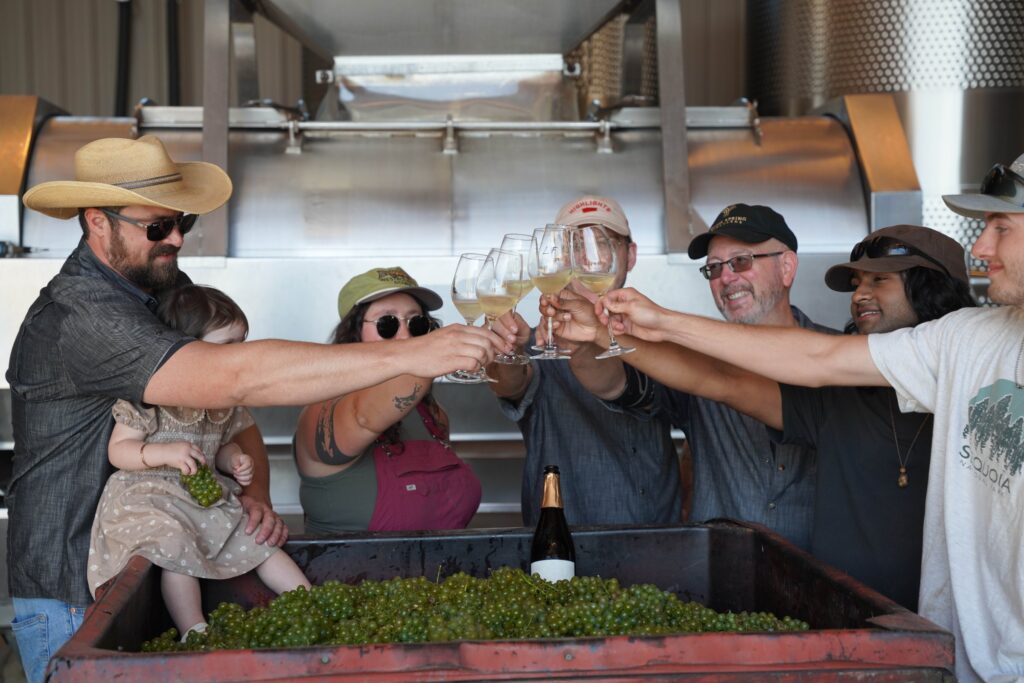
Every fall, Cornell’s viticulture and enology extension teams track ripening across New York in their weekly Véraison to Harvest reports, following the fruit from the first color change in the berries through the final pick. This year, those reports describe a season that asked a lot of our growers and then, just at the end, gave something back. Hans Walter-Peterson of Cornell Cooperative Extension’s Finger Lakes Grape Program describes a September of two halves: a warm, wet first two weeks that brought roughly two and a half inches more rain than normal, followed by a very welcome cooler and drier stretch. That dry spell carried into October, which kept the fruit clean and made this part of harvest, in his words, “a pleasant endeavor.”
With the fruit in, the work in the cellar shifts from speed to patience. The press is quiet now, and the 2026 vintage is doing its slow work in tank and barrel.
ON OUR TABLE: 2023 SERENITY VINEYARD MERLOT
Merlot has never had it easy in the Finger Lakes. It is less cold-hardy than Cabernet Franc or Blaufränksich, and it only thrives where a site gives it a little extra warmth. Serenity Vineyard is one of those special sites.
The block sits within the historic Standing Stone Vineyard on the south side of Seneca Lake, farmed biodynamically by Hermann J. Weimer. Its rows run north to south, so the vines catch reflected midday sun and the warmth that rises off the lake. It is exactly the set of conditions that allow Merlot to thrive here.
The 2023 season asked for patience. A warm stretch in late April pushed bud break early, and a frost on May 18th cost many growers across the region dearly. September arrived sunny and steady, and the fruit ripened evenly and beautifully through the end of the season. We harvested the fruit for this wine on October 5, 2023, and gave it 26 months in a combination of French and neutral oak before bottling in February 2026.
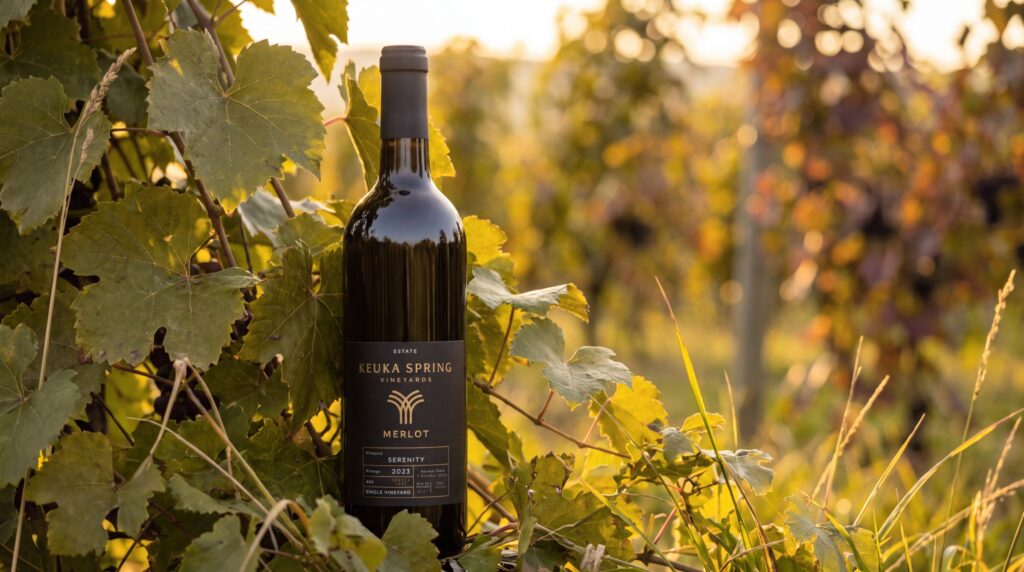
This wine evokes late-fall campfires: cozy, but polished. Cranberry and blackberry lead, with tobacco and cedar playing supporting roles and a lingering finish of black pepper and nutmeg. Bright acidity keeps all that depth lifted, which makes it a natural choice at the dinner table. Try it with roast pork or duck, a slow-cooked bolognese, or anything built around mushrooms.
93 points and a Gold Medal at the 2026 New York Wine Classic. $34.99 per bottle.
Our Vista Wine Club Members will also find a bottle in their Classic Vista Wine Club release in November 2026.
AT THE TABLE
When the evenings come early, we want food that fills the kitchen with something warm. Here are two of our favorite fall dishes, each matched with a bottle from our cellar.
Roasted Mushroom Ragù over Creamy Parmesan Polenta
PAIR WITH: 2023 SERENITY MERLOT → Find it here
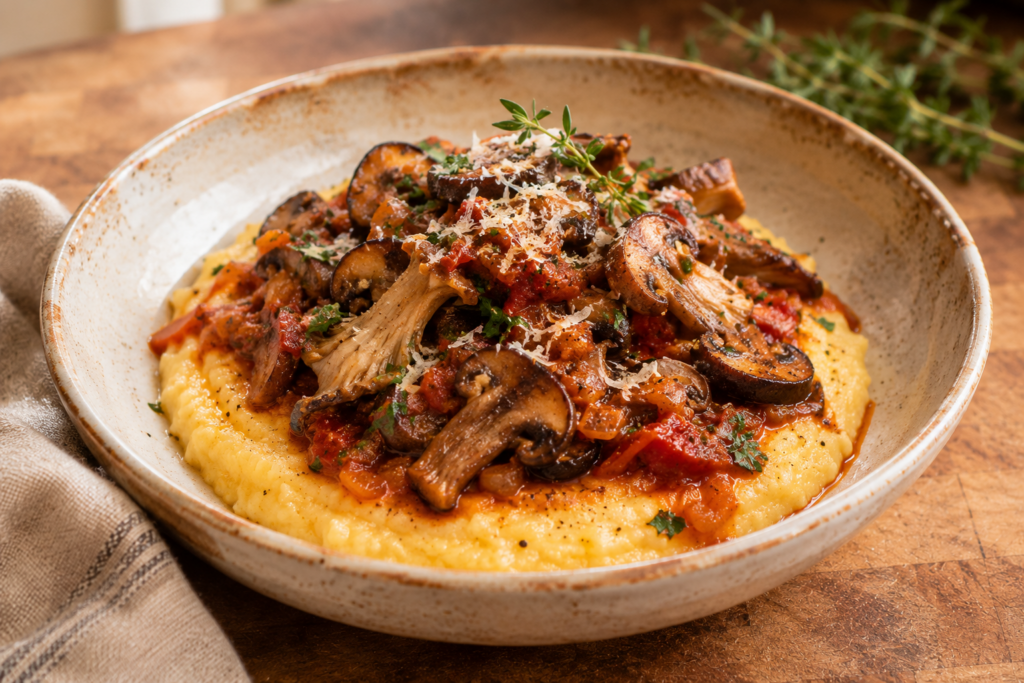
Oven-roasted mushrooms, sweet leeks, and a tomato and red-wine sauce make a hearty, meatless ragù, spooned over soft Parmesan polenta. The Merlot’s cranberry and blackberry fruit stand up to the tomato, while its cedar, black pepper, and nutmeg echo the deeply browned mushrooms and earthy herbs.
Serves 6 · Prep 20 min · Cook 45 min
Expand to see the full recipe
FOR THE ROASTED MUSHROOMS
- 1¾ lb mixed mushrooms, such as 1 lb cremini and ¾ lb oyster, sliced or torn into generous ½-inch pieces
- 2 tbsp extra-virgin olive oil
- ½ tsp kosher salt
- Freshly ground black pepper, to taste
FOR THE RAGÙ
- 1 tbsp extra-virgin olive oil
- 1 large leek, white and light green parts only, halved, carefully rinsed, and thinly sliced (about 1 cup)
- 3 garlic cloves, finely chopped
- 2 tbsp tomato paste
- ½ cup dry red wine, or extra vegetable broth for a no-wine version
- 1 (14.5-oz) can fire-roasted diced tomatoes, with juices
- ¾ cup low-sodium vegetable broth
- 1 tsp fresh thyme leaves
- ½ tsp finely chopped fresh rosemary
- 1 tsp balsamic vinegar
- ½ tsp kosher salt, plus more to taste
- ¼ tsp freshly ground black pepper
FOR THE POLENTA
- 4 cups water
- 1 cup whole milk
- 1 cup medium- or coarse-ground dry polenta (not instant)
- ½ tsp kosher salt
- 2 tbsp unsalted butter
- ¾ cup finely grated Parmigiano Reggiano, plus extra for serving
- ¼ tsp freshly ground black pepper
- 2 tbsp chopped fresh flat-leaf parsley, for serving
METHOD
- Heat the oven to 450°F (230°C). Spread the mushrooms across two large rimmed baking sheets so they have room to brown rather than steam. Toss with 2 tablespoons olive oil, ½ teaspoon salt, and a little pepper. Roast for 20 to 25 minutes, turning once halfway through, until the edges are deeply golden and much of their moisture has cooked away.
- While the mushrooms roast, bring the water, milk, and ½ teaspoon salt just to a gentle simmer in a heavy saucepan. Sprinkle the polenta into the liquid in a thin stream while whisking. Lower the heat and cook, stirring frequently with a wooden spoon, for 25 to 30 minutes, until the grains are tender and the mixture is soft and spoonable. Add a splash of hot water if the polenta thickens before it finishes cooking.
- Start the ragù in a separate large skillet or Dutch oven. Warm 1 tablespoon olive oil over medium heat and cook the leek for 5 to 6 minutes, stirring occasionally, until tender and sweet. Add the garlic and stir for 30 seconds.
- Push the leeks to the edges of the pan. Add the tomato paste to the center and cook, stirring, for about 2 minutes, until its color deepens to brick red. Mix the paste into the leeks, then add the red wine. Scrape up the browned bits and simmer for 2 to 3 minutes to reduce the wine by about half.
- Add the fire-roasted tomatoes with their juices, vegetable broth, thyme, rosemary, ½ teaspoon salt, and ¼ teaspoon pepper. Simmer uncovered for 10 to 12 minutes, stirring occasionally, until the sauce thickens slightly but remains loose enough to coat the mushrooms.
- Fold the roasted mushrooms and any juices from their pans into the sauce. Simmer together for another 3 to 5 minutes so the mushrooms absorb some of the sauce. Remove from the heat, stir in the balsamic vinegar, and taste for seasoning.
- When the polenta is tender, turn off the heat. Stir in the butter, Parmigiano Reggiano, and black pepper until creamy. Adjust the texture with a little hot water or warm milk if needed. It should settle softly when spooned into a bowl.
- Divide the polenta among six shallow bowls. Spoon the ragù generously into the center, leaving a little golden polenta visible around the edges. Finish with parsley, a light grating of Parmesan, and black pepper. Serve warm.
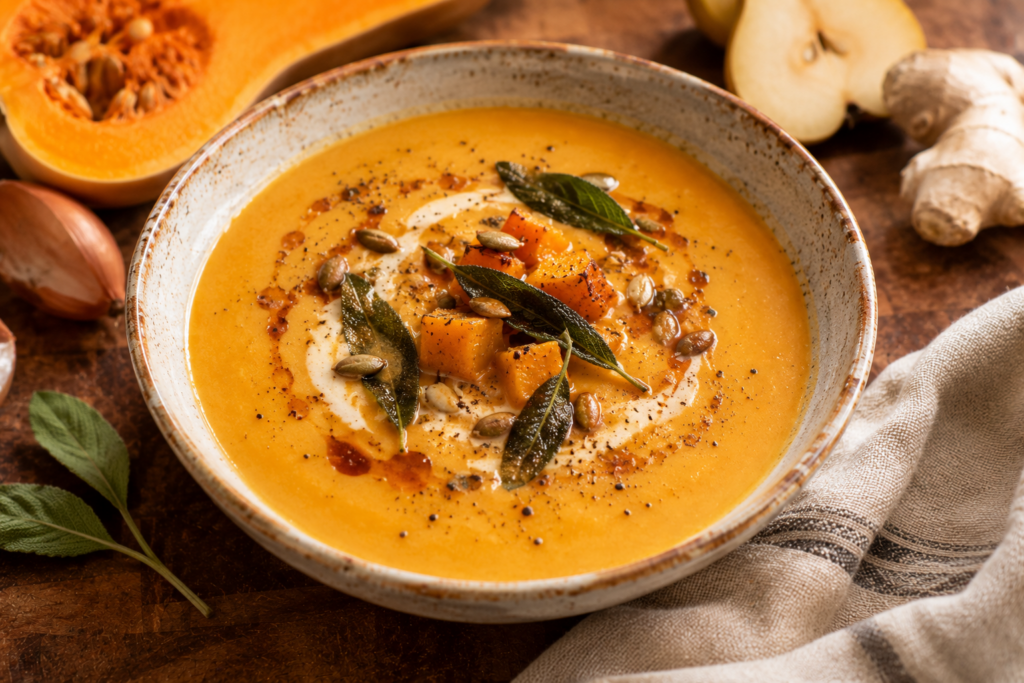
Roasted Butternut Squash Soup with Sage Brown Butter
PAIR WITH: 2025 CLASSIC GEWÜRZTRAMINER → Find it here
Roasted butternut squash and ripe pear blended until silky, brightened with ginger and a splash of cider vinegar, then finished with crisp sage, brown butter, crème fraîche, and toasted pumpkin seeds. The Gewürztraminer’s lychee and stone fruit echo the roasted pear and ginger, while its bright finish cuts through the brown butter.
Serves 4 · Prep 20 min · Cook 50 min
Expand to see the full recipe
FOR THE ROASTED SQUASH AND PEAR
- 1 medium butternut squash (about 2½ lb whole), peeled, seeded, and cut into 1-inch pieces (about 5 cups)
- 1 ripe but firm Bosc pear, cored and cut into 1-inch pieces
- 2 large shallots, peeled and quartered
- 2 tbsp extra-virgin olive oil
- ¾ tsp kosher salt, divided
- ¼ tsp freshly ground black pepper
FOR THE SOUP
- 1 tsp finely grated fresh ginger
- ½ tsp ground coriander
- 3 cups low-sodium vegetable broth, plus a little extra to adjust texture
- 2 tsp apple cider vinegar
- Salt and freshly ground black pepper, to taste
TO FINISH
- 3 tbsp unsalted butter
- 8 to 10 fresh sage leaves, washed and completely dried
- ¼ cup crème fraîche or plain full-fat Greek yogurt, stirred until spoonable
- 2 tbsp roasted, unsalted pumpkin seeds (pepitas)
- A few reserved roasted squash cubes (optional)
METHOD
- Heat the oven to 425°F (220°C) and line a large baking sheet with parchment. Toss the squash, pear, and shallots with the olive oil, ½ teaspoon of the salt, and the pepper. Spread them in a single layer, leaving some space between pieces so the vegetables roast rather than steam.
- Roast for 30 to 35 minutes, turning once around the halfway point, until the squash is fork-tender and the edges of the pear and shallots have begun to caramelize. If the shallots brown too quickly, remove them early and keep roasting the squash. Set aside a few nice squash cubes for garnish if you like.
- Place the roasted squash, pear, and shallots in a medium heavy pot. Stir in the ginger and coriander. Add the 3 cups broth and simmer gently for about 5 minutes so the flavors come together.
- Take the pot off the heat. Blend with an immersion blender until very smooth, keeping the blade fully submerged to avoid splashes. Or blend in small batches in a vented countertop blender, never filling it more than halfway with hot liquid. Return the purée to the pot.
- Stir in the cider vinegar and the remaining ¼ teaspoon salt. Taste and add more salt or pepper if needed. Warm over low heat without boiling. If the soup is too thick, add warm broth a tablespoon or two at a time until it pours smoothly from a ladle.
- Make the sage brown butter just before serving. Melt the butter in a small light-colored skillet over medium heat, swirling gently as it foams. When the milk solids turn golden and the butter smells nutty, add the dry sage leaves and cook 20 to 30 seconds, until crisp. Immediately pour the butter and leaves into a heatproof bowl to stop the cooking.
- Divide the soup among four warm bowls. Swirl a teaspoon or two of crème fraîche into each, then spoon over a little sage brown butter. Top with one or two crisp sage leaves, pumpkin seeds, and any reserved squash. Serve right away.